Lens & Land: Exploring Landscape Photography Techniques
Landscape photography on the Sunshine Coast and across South East Queensland is about more than photographing a nice view. The strongest images come from reading light, choosing the right lens, understanding the land, and using technique in a way that helps the scene feel more immersive, more intentional, and more emotionally real.
Landscape photography is often misunderstood as simply pointing a camera at somewhere beautiful and hoping the location does the work.
Sometimes it can feel like that in the moment. You arrive somewhere with great light, the conditions are lining up, and the scene already looks incredible before the camera even comes out. But the longer you spend photographing landscapes, the more obvious it becomes that strong landscape photography is not really about recording a pretty place. It is about interpreting it.
It is about deciding what the land is actually saying.
That might be the scale of a mountain range, the quiet pull of a coastal scene, the texture in a stormy sky, the movement of water through foreground rock, or the way a patch of light changes the entire mood of an otherwise simple location. The landscape is the subject, but the photograph still has to be built. And that is where lens choice, composition, timing, and technique start to matter.
On the Sunshine Coast, in the Sunshine Coast Hinterland, and across South East Queensland more broadly, this matters even more because the variety is so strong. Coastal foregrounds, hinterland lookouts, forested tracks, open beaches, rock shelves, tidal scenes, and changing weather all ask for different decisions. The camera sees the same place very differently depending on the lens you choose and how you choose to use it.
Understanding the landscape comes before understanding the gear
This is always the first step for me.
Before you worry about focal length, filters, settings, or whether you should be shooting wide or tight, you have to understand what is actually happening in front of you. What is the mood of the place? What is the light doing? Is the scene about scale, detail, atmosphere, movement, colour, or shape? Is the foreground helping, or just existing? Is there a stronger story in the wider scene, or in one isolated section of it?
That kind of reading matters because not every landscape is asking for the same treatment.
A rugged hinterland view might be more about layered distance and changing light. A coastal scene near the Sunshine Coast might be more about movement in the water, reflections in the sand, or the relationship between foreground rock and the horizon. A misty morning in South East Queensland may need a softer, more restrained approach than a dramatic seascape with strong wind and surf.
The landscape usually tells you what sort of photograph it wants to become, but only if you slow down long enough to notice.
The role of lenses in landscape photography
Lenses change how a landscape feels.
That is one of the most important things to understand. They do not just change how much fits in the frame. They change the way space is read, how distance feels, how foreground interacts with background, and where the viewer’s eye settles.
Wide-angle lenses are often the go-to choice for landscape photography because they help capture a broader scene and make it easier to include foreground, middle ground, and background in one frame. They are incredibly useful when the location has strong depth, interesting foreground texture, or dramatic skies that genuinely add to the scene.
But wide does not automatically mean better.
A telephoto lens can be just as powerful in landscape photography because it helps isolate shape, compress layers, and simplify a scene. Sometimes the stronger image is not the whole lookout or the full beach. Sometimes it is the way distant ridgelines stack into each other, or the way light falls on one section of shoreline, or how a solitary tree sits against receding hills.
I’ve had plenty of times where a location looked good in person, but messy through a wide lens. Then switching to a longer focal length suddenly pulled the whole thing together. That is one of the biggest lessons in landscape work. The camera does not see as your eyes do, and the lens choice often decides whether the image feels intentional or just descriptive.
A strong landscape photograph is not only about where you stood, it is about how you chose to see the place.
Wide-angle lenses and the feeling of space
Wide-angle lenses are popular for a reason.
They can make a landscape feel immersive. They let you build layers into the frame, draw attention to foreground textures, and show the relationship between the land, sky, and horizon. On the Sunshine Coast, that can work beautifully for coastal scenes where wet sand, rock formations, and moving water create natural depth.
But a wide lens only works well when there is enough happening close to the camera to justify it.
This is where a lot of older landscape advice goes wrong. People are told to go wide, but if the foreground is weak, empty, or distracting, the image can start to feel hollow. The frame gets bigger, but not stronger. A wide-angle lens is not there to include more for the sake of it. It is there to make the space feel deeper and more connected.
If the foreground is strong, wide can feel brilliant. If it is not, the photograph often needs a different approach.
Telephoto lenses and the power of isolation
This is one of the most underrated parts of landscape photography.
Longer focal lengths are often associated with wildlife or sports, but they can be incredibly useful in landscape work. They help simplify busy scenes, isolate shape and light, and compress distant layers in a way that makes the image feel more deliberate.
This is particularly useful in landscape photography around the Sunshine Coast Hinterland, where layered ridgelines, changing weather, and distant peaks can become much more expressive once the wider distractions are stripped away.
A telephoto lens can also help you find photographs in places that feel visually overwhelming at first. Instead of trying to make the entire scene work, you can focus on one piece of it, one shaft of light, one receding headland, one section of surf, one tree line, one tonal shift in the hills. That ability to simplify is one of the strongest tools a photographer has.
Depth of field still matters, but not always in the obvious way
Depth of field is one of the classic landscape photography topics, and for good reason.
A narrower aperture often helps keep foreground, middle ground, and background sharp, which is useful when the strength of the image comes from the whole scene working together. That is why stopping down is such a familiar part of landscape technique.
But depth of field is not a rigid rule.
Sometimes the stronger landscape image comes from letting certain parts of the frame breathe a little more. Not every photograph needs absolute front-to-back sharpness. If the subject is a more isolated detail, a softer fall-off can actually help direct attention. The key is making sure the depth of field suits the story of the image, rather than using one setting because it feels like the landscape “should” be shot that way.
Composition is what turns a view into a photograph
This is where the real work happens.
A beautiful location is not automatically a strong image. The difference between a nice view and a compelling landscape photograph usually comes down to composition. Where you stand, what you exclude, what you place in the foreground, how the lines move through the frame, whether the image feels balanced, and whether the eye knows where to go first.
Classic tools like leading lines, framing, negative space, and the rule of thirds still matter, but they only matter when they help the image feel stronger. They are tools, not formulas.
One of the most useful things in landscape photography is learning how to simplify. Busy natural scenes can fall apart quickly if every element is asking for equal attention. Good composition often means giving the scene a visual hierarchy, letting one thing lead, and making sure the rest supports it.
Common mistake: trying to photograph everything at once
This is one of the most common problems in landscape photography, especially in scenic places.
The location looks incredible in person, so the instinct is to include all of it. The sky, the foreground, the cliffline, the headland, the extra trees, the water, the colours, the reflections, the distant hills, all of it. But when everything is included with equal weight, the image often becomes weaker.
The viewer stops knowing what matters most.
A stronger approach is usually to decide what the image is actually about. Is it the foreground texture? The pastel light over the coast? The receding layers of the hinterland? The movement in the water? The curve of the shoreline? Once that becomes clear, composition gets much easier.
Landscape photography usually improves when you stop trying to say everything in one frame.
Golden hour is powerful, but timing is broader than that
The soft light around sunrise and sunset is still some of the best light you can shoot in, especially for coastal landscape photography on the Sunshine Coast. Warm light, longer shadows, gentler contrast, and more atmosphere can turn even a familiar scene into something much more compelling.
But timing is about more than golden hour.
Some locations work beautifully under moody overcast light. Some need cloud movement. Some coastal scenes improve with a bit of wind and texture in the water. Some hinterland scenes need mist, rain, or soft filtered light to feel right. One of the best things you can do as a landscape photographer is stop treating “nice light” as the only useful condition.
Sometimes the most memorable images come from weather and atmosphere rather than pure colour.
Long exposure can add mood, but it should suit the scene
Long exposure is one of the most powerful techniques in landscape photography when it fits the subject.
It can soften moving water, stretch clouds, reduce visual noise, and create a more atmospheric feel. On the coast, it is especially useful when waves, flowing water, or fast-moving clouds are part of the visual story. It can turn a rougher scene into something calmer, or make the movie feel more cinematic and deliberate.
But long exposure is not automatically better.
Sometimes it strips too much energy out of the image. Sometimes the movement in the water is actually the life of the frame, and softening it too much makes the scene feel flatter. Like everything else in landscape photography, it works best when the technique supports what the place is already offering.
Filters still have their place
Filters remain incredibly useful in landscape photography, particularly when you want more control in the field.
A polariser can help manage reflections, deepen colour, and bring better control to water and foliage. Neutral density filters can open the door to longer exposures in brighter conditions. Graduated filters, depending on how you like to work, can also help with balancing difficult light in-camera.
The key is not just owning them, but knowing when they are actually improving the image. A filter should solve a problem or strengthen the feel of the scene, not just be used because it is part of the routine.
A practical checklist before photographing a landscape
Decide what the image is really about before choosing the lens
Check whether the foreground genuinely helps the frame
Try both wide and longer focal lengths before settling
Watch how the light is changing across the scene
Keep the composition simple enough that the eye knows where to go
Use long exposure only if it improves the mood of the image
Landscape photography is where technique meets feeling
This is probably the most important part of it.
You can learn the technical side, the lenses, the settings, the composition rules, the filters, the timing, all of it. And all of that matters. But landscape photography becomes far more meaningful when the image carries some emotional truth as well. A sense of calm, scale, tension, solitude, energy, stillness, or connection to place.
That is why it is such a rewarding genre.
It is not only about getting the scene sharp and exposed properly. It is about making the photograph feel like the place felt when you stood there. Sometimes that means going wide. Sometimes it means isolating details. Sometimes it means waiting for a different light. Sometimes it means accepting that the obvious image is not the best one.
The more you do it, the more you realise landscape photography is less about collecting views and more about learning how to respond to the land well.
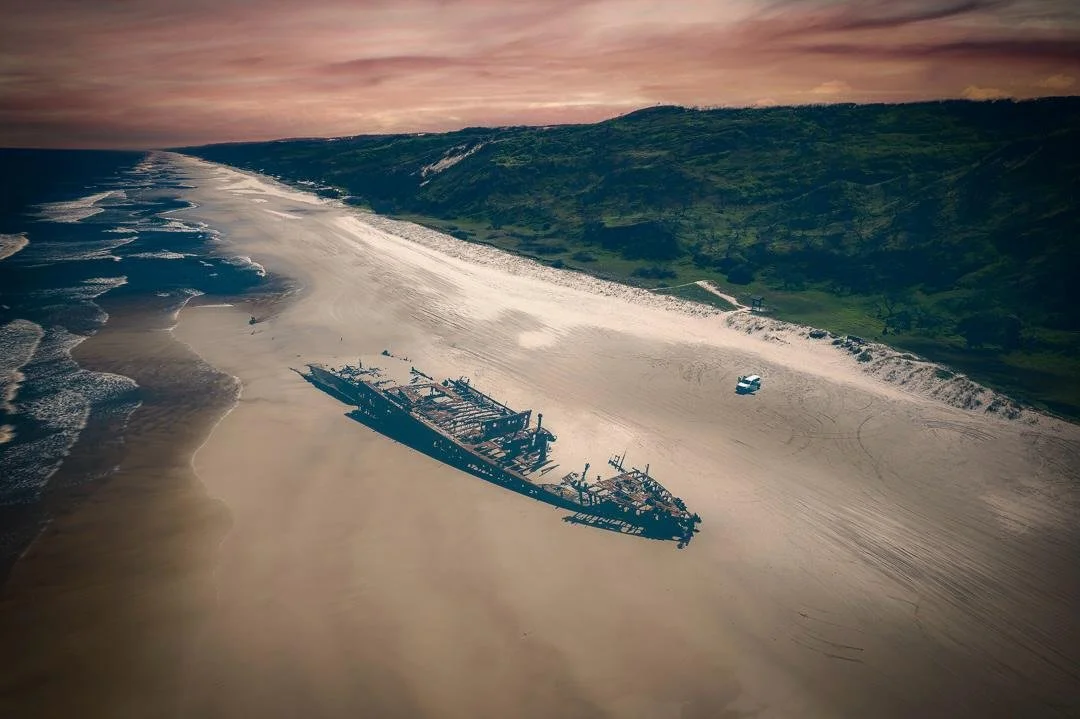
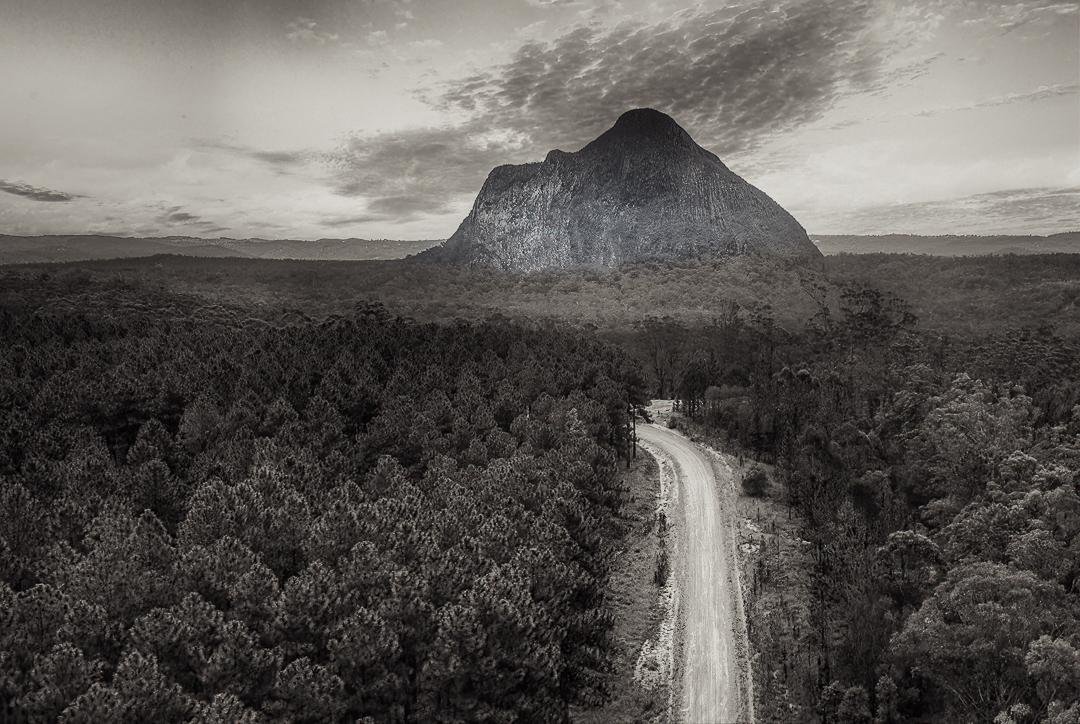
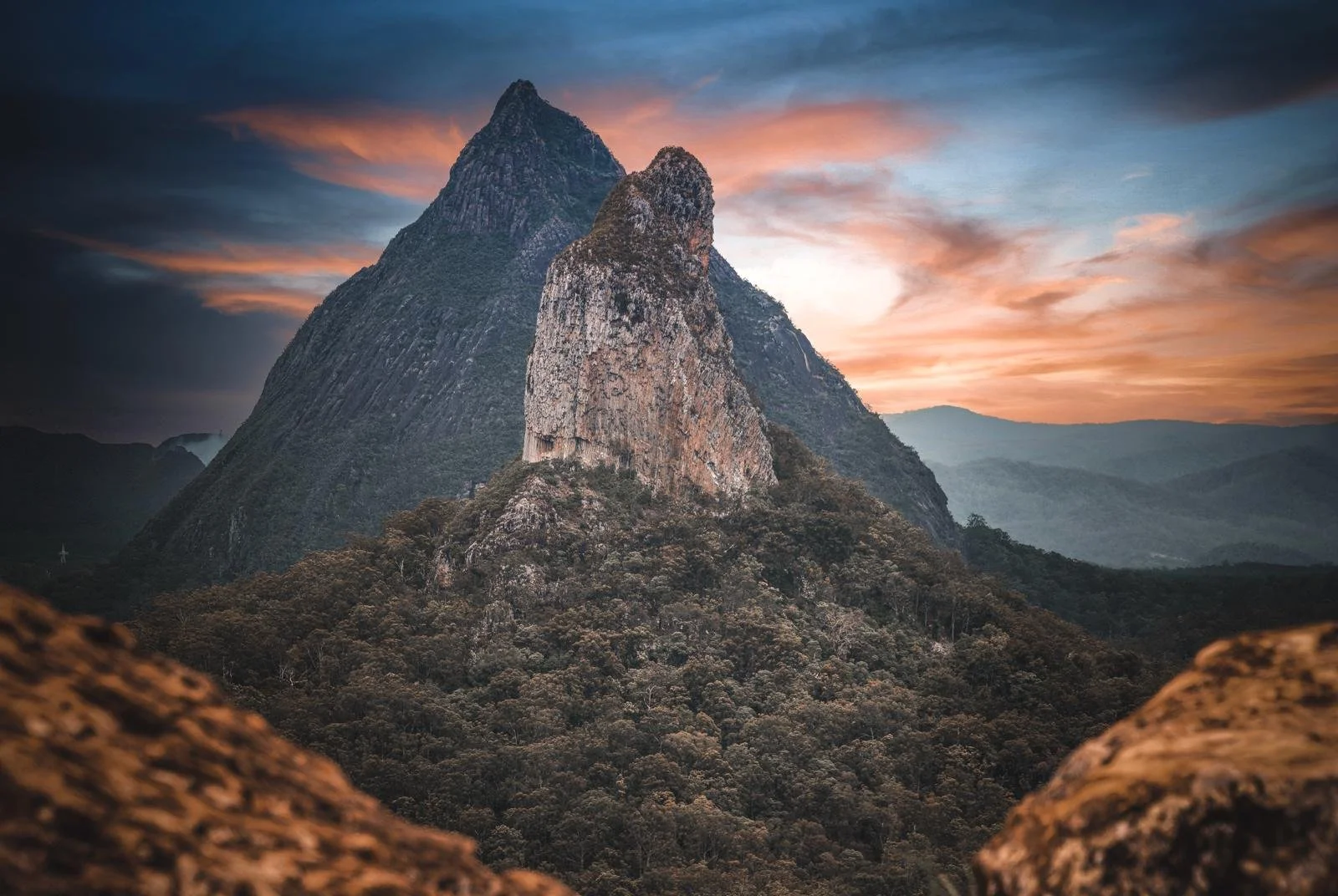

Capturing the essence of landscapes requires a keen eye, technical proficiency, and creative vision. With the right techniques and a dash of inspiration, you can transform ordinary scenes into extraordinary works of art.
Mini FAQ
What lens is best for landscape photography on the Sunshine Coast?
There is no single best lens. Wide-angle lenses are great for coastal foregrounds, big skies, and immersive scenes, while telephoto lenses work beautifully for isolating details, layered hinterland views, and simplifying busy natural scenes.
Should landscape photography always be shot with a narrow aperture?
Not always. A narrower aperture is helpful when you want more of the frame sharp, but sometimes a slightly softer depth of field works better if the image is more about mood or a specific isolated subject.
Is a wide-angle lens always best for landscape photography?
No. Wide-angle lenses are powerful, but only when the foreground and scene support them. In many landscapes across South East Queensland, a longer focal length can produce a cleaner and more intentional image.
Key Takeaways
Strong landscape photography starts with reading the land, not just choosing a lens.
Wide-angle and telephoto lenses both have their place, depending on what the scene is actually saying.
On the Sunshine Coast and across South East Queensland, better landscape images usually come from timing, composition, and emotional clarity rather than simply photographing a beautiful view.